
TL;DR
If you discover a hot electrical outlet:
- Stop using the outlet.
- Unplug appliances or devices connected to it if you can do so safely.
- Do not continue using the outlet to see whether the problem happens again.
- Look for other warning signs such as discoloration, buzzing, sparking, or a burning smell.
- If the outlet is very hot, damaged, or showing other warning signs, have a qualified electrician inspect it.
If an outlet is hot enough to be uncomfortable to touch, treat it as an electrical safety issue rather than normal operation.
Why trust Houston Local Advantage?
We research local home service providers and publish homeowner guides using information from trusted organizations. Our goal is to help Houston-area homeowners make informed decisions before hiring a contractor or preparing for severe weather.
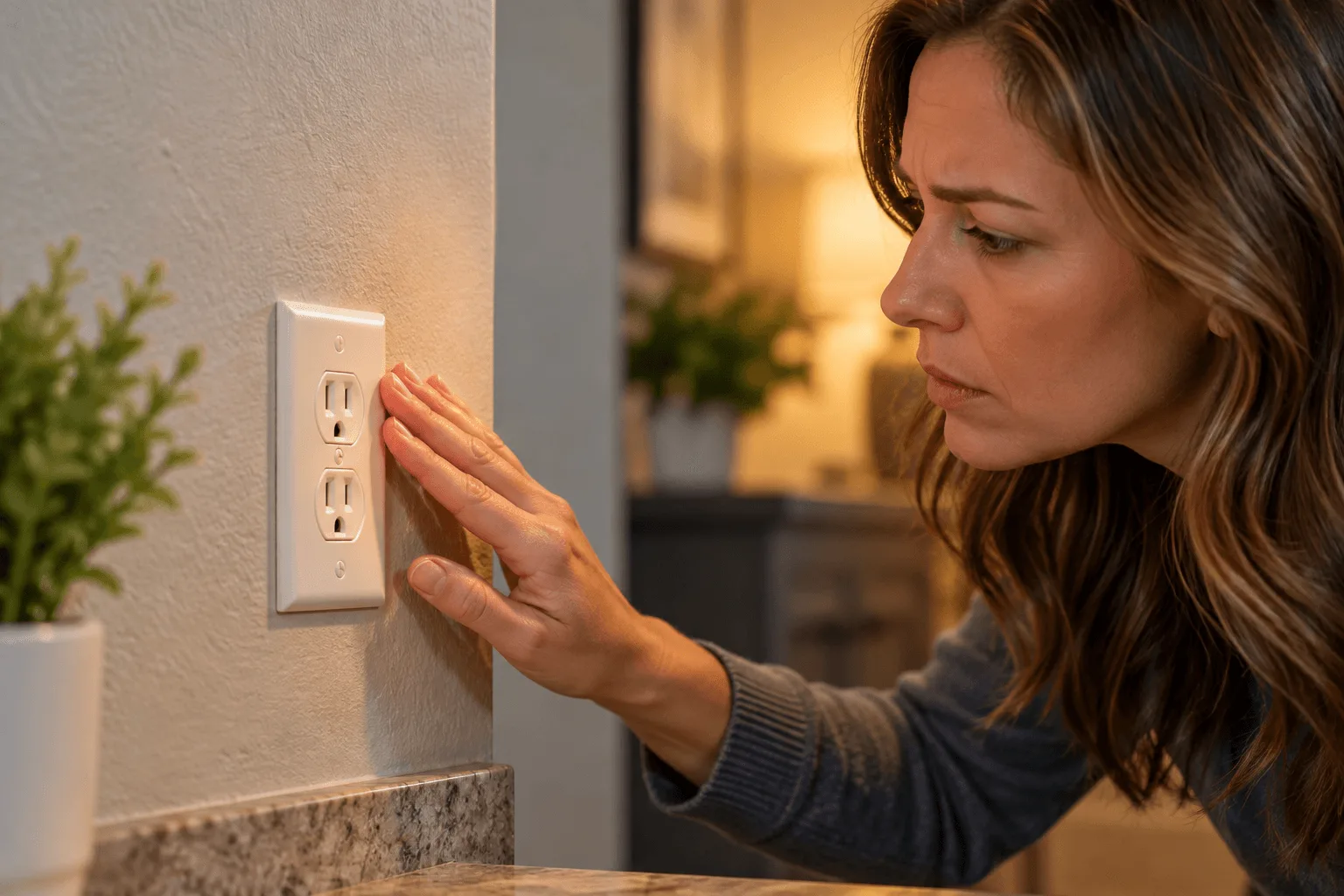
If an electrical outlet in your Cypress home feels hot to the touch, don't ignore it.
Electrical outlets can sometimes feel slightly warm when powering certain devices, but an outlet or wall plate that becomes noticeably hot—especially one that is uncomfortable to touch—can indicate an electrical problem that needs attention.
The U.S. Consumer Product Safety Commission (CPSC) identifies overheating at receptacles as a warning sign of a potential electrical hazard. Problems such as overloaded circuits, loose electrical connections, worn outlets, or damaged wiring can all cause excess heat.
Here's how to recognize when a warm outlet may be a warning sign and what you should do next.
Is It Normal for an Electrical Outlet to Feel Warm?
A little warmth around some electrical devices does not automatically mean there is an emergency. However, the outlet itself should not become excessively hot.
CPSC guidance notes that parts of a home's electrical system may sometimes feel warm, but receptacle covers should never become hot or painful to touch.
An outlet that suddenly becomes hotter than usual—or continues getting hotter while something is plugged into it—deserves attention.
Heat is especially concerning when it appears along with:
- Brown or black discoloration
- A burning or melting smell
- Buzzing, sizzling, or crackling sounds
- Sparks
- A loose-fitting plug
- A frequently tripping circuit breaker
- Power cutting in and out
These symptoms can indicate that something more serious is happening behind the outlet.
Why Does an Electrical Outlet Get Hot?
Several electrical problems can cause heat to develop around an outlet.
1. The Outlet or Circuit May Be Overloaded
One common cause is simply too much electrical demand.
Electrical Safety Foundation International (ESFI) identifies warm or discolored wall plates as one of the warning signs of an overloaded electrical system. Other overload warning signs include flickering or dimming lights, frequently tripped breakers, buzzing receptacles, and burning odors.
High-demand appliances can place significant loads on a circuit.
Problems can also occur when homeowners rely heavily on:
- Multi-outlet adapters
- Extension cords
- Power strips
- Several high-demand appliances on the same circuit
A power strip may provide more places to plug devices in, but it does not increase how much electricity the circuit can safely supply.
If an outlet becomes hot when several devices are operating, electrical demand may be part of the problem.
2. A Loose Electrical Connection May Be Creating Heat
The problem may not be how much electricity you're using.
A loose connection inside the receptacle or electrical box can create excessive heat.
CPSC specifically identifies loose electrical connections as a possible cause of overheating at outlets and switches. A deteriorating connection can also lead to electrical arcing, which can increase the risk of fire.
Because these connections are behind the wall plate, homeowners often cannot see the problem from the outside.
The outlet may look perfectly normal while the connection behind it is overheating.
3. The Outlet May Be Worn Out
Electrical outlets don't last forever.
Over time, the internal contacts that grip the blades of a plug can wear down. You may notice that plugs no longer fit tightly or seem to fall out easily.
CPSC warns that a loose plug connection can overheat. If several different plugs fit loosely in the same receptacle, the receptacle itself may need replacement.
A loose outlet isn't just inconvenient. Poor electrical contact can generate heat.
4. A High-Draw Appliance May Be Contributing to the Problem
Some household appliances require considerably more power than small electronics.
Portable heaters, hair dryers, countertop cooking appliances, and similar devices can place substantial demand on a circuit.
ESFI recommends plugging major appliances directly into wall receptacles rather than relying on extension cords or multi-outlet converters. It also recommends using only one heat-producing appliance in a receptacle at a time.
If the outlet becomes hot only when a particular appliance is operating, stop using that appliance with the outlet until the cause is determined.
5. The Wiring Behind the Outlet May Be Damaged
Heat can also originate from wiring rather than the receptacle itself.
Loose, damaged, deteriorated, or improperly connected wiring can create unsafe conditions inside the electrical box.
This is one reason replacing the outlet itself may not solve the underlying problem.
An electrician may need to inspect the receptacle, connections, wiring, and circuit to determine where the heat is coming from.
Why Is My Outlet Hot With Nothing Plugged Into It?
This is an important warning sign.
An unused outlet can still be part of an active electrical circuit. Electricity supplying other receptacles may pass through connections associated with that outlet.
CPSC specifically notes that an unused receptacle can become hot because power delivered elsewhere on the circuit may pass through connections at other receptacles.
That means an empty outlet isn't necessarily electrically inactive.
If an outlet feels hot even though nothing is plugged into it, stop using it and have the electrical system inspected.
What If the Outlet Is Hot and the Breaker Keeps Tripping?
A hot outlet combined with a circuit breaker that repeatedly trips should not be ignored.
Circuit breakers are designed to interrupt electrical current when conditions exceed what the circuit can safely handle.
If you're also experiencing repeated breaker trips, see our guide on why your circuit breaker keeps tripping for the common causes and warning signs.
Do not repeatedly reset a breaker just to keep power flowing to an outlet that is overheating.
What If the Outlet Stops Working?
An outlet that becomes hot and later loses power may have a problem with the receptacle, wiring, GFCI protection, or circuit.
If you're dealing with a dead receptacle rather than just heat, our guide to what to check when an electrical outlet is not working walks through the basic checks a homeowner can safely make before calling an electrician.
If the outlet stopped working after becoming unusually hot, discolored, or giving off a burning smell, don't continue troubleshooting by repeatedly plugging devices into it.
Have it inspected.
Could a GFCI Outlet Become Hot?
A GFCI receptacle contains additional electrical components compared with a standard outlet, but excessive heat should still be taken seriously.
If a GFCI outlet is also repeatedly shutting off power, there may be another electrical issue involved.
Our guide to why a GFCI outlet keeps tripping explains how ground faults, moisture, appliances, and other problems can cause repeated GFCI trips.
If the GFCI is hot, damaged, discolored, or smells burned, stop using it and have it checked.
Can a Hot Outlet Cause a Fire?
An overheating outlet can be a potential fire hazard.
CPSC specifically warns that receptacles or switches that become hot enough to be uncomfortable to touch can indicate a fire hazard involving the receptacle, switch, or wiring.
ESFI also identifies warm or discolored wall plates, buzzing receptacles, burning odors, and frequently tripped breakers as warning signs associated with electrical overloads.
The important thing is not to wait for the outlet to smoke or spark before taking action.
Heat itself can be a warning.
Should I Unplug Something From a Hot Outlet?
If you notice an outlet becoming unusually warm while an appliance is operating, stop using the outlet.
If the plug and outlet can be handled safely and there are no signs of active arcing, melting, smoke, or other immediate danger, disconnect the device.
However, don't continue plugging the appliance back in to test whether the outlet heats up again.
And don't remove the outlet cover or attempt to inspect the wiring behind it unless you're qualified to perform electrical work.
When Should I Stop Using the Outlet?
Stop using an outlet and arrange for an electrical inspection if you notice:
- The outlet is hot or painful to touch
- Brown, yellow, or black discoloration
- A burning or melting smell
- Buzzing, sizzling, or crackling
- Visible sparks
- Melted plastic
- Plugs that fit loosely
- Power cutting in and out
- Repeated circuit breaker trips
- Heat even when nothing is plugged into the outlet
If you see smoke or signs of an active electrical fire, move to safety and contact emergency services.
What Can I Safely Check Myself?
Homeowners can make a few observations without opening the outlet or touching electrical wiring.
You can check:
1. What was plugged into the outlet?
A high-demand appliance may have been operating when you noticed the heat.
2. Were several devices running on the same circuit?
Multiple high-demand devices may contribute to an overloaded circuit.
3. Does the plug fit loosely?
A plug that falls out or moves easily may indicate a worn receptacle.
4. Is the wall plate discolored?
Brown or darkened areas can indicate previous overheating.
5. Are there other symptoms?
Breaker trips, flickering lights, buzzing, or burning odors can provide additional clues.
What you should not do is remove the receptacle from the wall and begin testing or tightening wiring unless you're qualified to work on electrical systems.
Find an Electrician in Cypress
A hot outlet is one electrical warning sign worth taking seriously.
If you've stopped using the outlet and aren't sure why it is overheating, a qualified electrician can inspect the receptacle, wiring, circuit, and electrical load to identify the problem.
You can browse Cypress electricians on Houston Local Advantage to find local electrical professionals serving Cypress-area homeowners.
Frequently Asked Questions
Is it normal for an electrical outlet to feel warm?
A slightly warm electrical component is not always an emergency, but a receptacle or wall plate should not become hot or uncomfortable to touch. Excessive heat can indicate an electrical problem.
Why is my outlet hot with nothing plugged into it?
An outlet can still carry electrical current as part of a circuit even when nothing is plugged directly into it. CPSC notes that power serving other outlets may pass through connections at an unused receptacle. A hot unused outlet should be inspected.
Should I stop using a hot outlet?
Yes. If an outlet is noticeably hot, discontinue using it until the cause has been identified.
Why does my outlet get hot when I plug something in?
The appliance may be placing a heavy load on the circuit, or there may be a loose or deteriorated electrical connection at the receptacle. A worn receptacle can also create poor contact and excess heat.
Can a loose outlet cause overheating?
Yes. Poor contact between a plug and receptacle can contribute to overheating. If several plugs fit loosely in the same outlet, the receptacle may be worn and need replacement.
Can a hot outlet trip the circuit breaker?
The electrical condition causing the outlet to overheat may also cause the circuit breaker to trip. Repeated breaker trips should be investigated rather than repeatedly reset.
Can I replace a hot outlet myself?
Replacing the receptacle may not address the actual cause of the overheating. The problem could involve the outlet, its connections, wiring, circuit load, or another part of the circuit. A qualified electrician can determine the source of the heat.
Sources
- Electrical Safety Foundation International (ESFI) - Home Electrical Safety. https://www.esfi.org/home-safety
- U.S. Consumer Product Safety Commission (CPSC) - Guide to Home Wiring Hazards. https://www.cpsc.gov/s3fs-public/518.pdf