
TL;DR
If an electrical outlet isn't working:
- Test another device in the outlet.
- Check whether nearby outlets have also lost power.
- Check your electrical panel for a tripped breaker.
- Look for a tripped GFCI outlet in the kitchen, bathroom, garage, laundry area, or outdoors.
- Check whether the outlet is controlled by a wall switch.
- Stop using the outlet if it's hot, discolored, buzzing, sparking, or smells burned.
If the breaker and GFCI aren't the problem and the outlet still has no power, the cause may be inside the electrical system and should be inspected by an electrician.
Why trust Houston Local Advantage?
We research local home service providers and publish homeowner guides using information from trusted organizations. Our goal is to help Houston-area homeowners make informed decisions before hiring a contractor or preparing for severe weather.
An electrical outlet that suddenly stops working doesn't always mean the outlet itself has failed. The problem could be as simple as a tripped circuit breaker or GFCI, or it could involve a loose connection or another electrical issue that needs professional attention.
For Cypress homeowners, a few basic checks can help narrow down the problem before calling an electrician. The key is knowing what you can safely check yourself—and when to stop troubleshooting.
Why Would an Electrical Outlet Suddenly Stop Working?
A dead outlet can have several possible causes.
Sometimes the outlet has simply lost power because a safety device elsewhere in the electrical system shut the circuit down. In other situations, the problem may be with the receptacle itself or the wiring supplying it.
Before assuming the outlet needs to be replaced, start with the simplest possibilities.
1. Make Sure the Outlet Is Actually the Problem
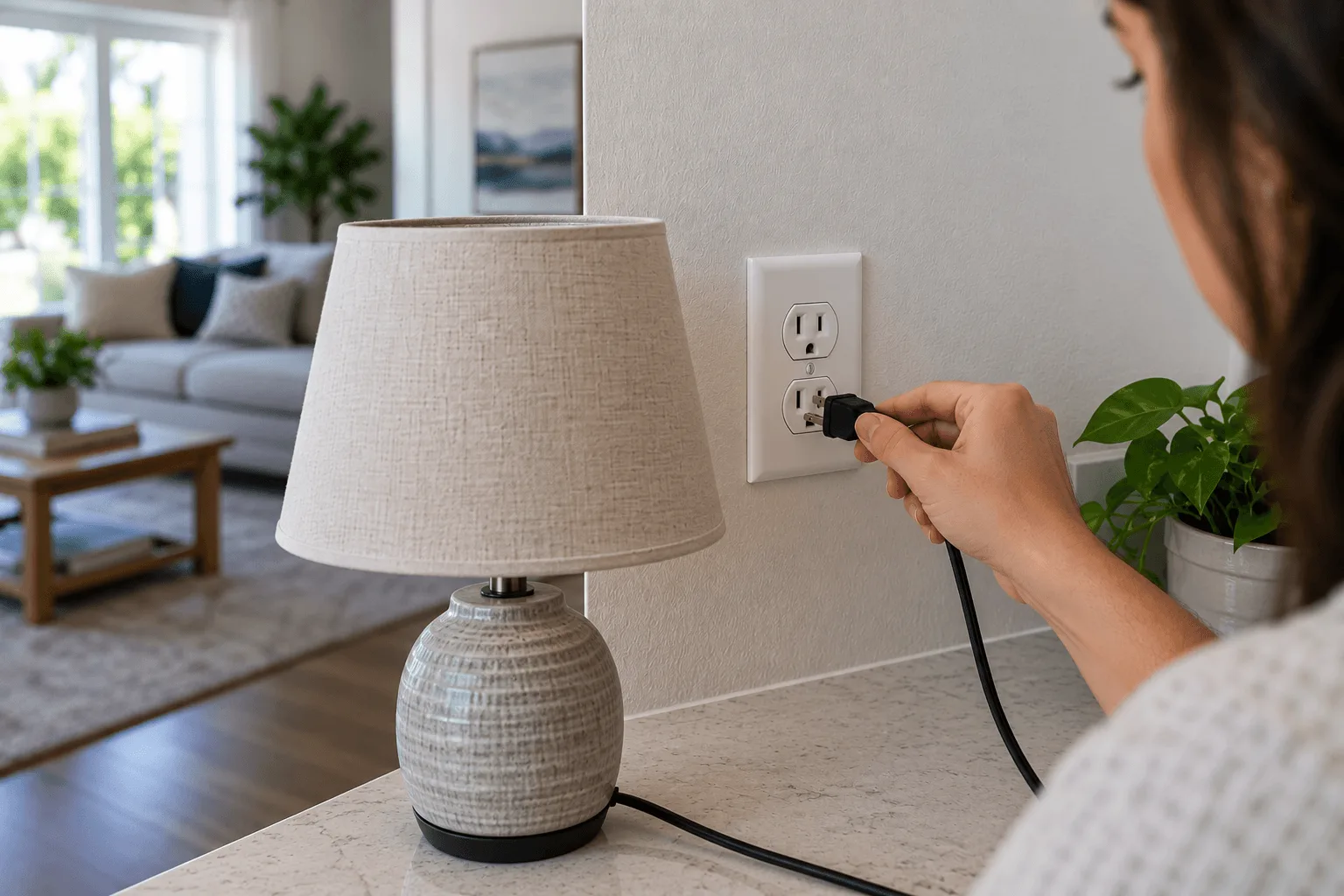
First, unplug whatever isn't working and test the outlet with another device that you know works.
A lamp is a good option.
If the lamp works, the original appliance, charger, or device may be the problem rather than the outlet.
If the second device doesn't work either, check other outlets and lights nearby.
This can help determine whether you're dealing with one dead outlet or a larger portion of the circuit that has lost power.
2. Check for a Tripped Circuit Breaker
If several outlets stopped working at the same time, check your home's electrical panel.
A circuit breaker can trip when it detects an electrical condition that requires the circuit to be shut down.
Sometimes a tripped breaker is obvious because the switch has moved to the OFF position. Other breakers may appear to sit between ON and OFF.
If you find a tripped breaker, turn off or unplug devices on the affected circuit before resetting it.
Move the breaker completely to OFF and then back to ON.
If power returns and the breaker stays on, continue to monitor the circuit.
If the breaker trips again, don't keep resetting it. Repeated tripping can indicate an electrical problem that needs to be diagnosed.
See our guide to why a circuit breaker keeps tripping if this is happening repeatedly in your Cypress home.
3. Check for a Tripped GFCI Outlet
This is one of the most important things to check when an outlet has no power.
A Ground Fault Circuit Interrupter, or GFCI, is designed to quickly shut off electricity when it detects a ground fault.
According to the Electrical Safety Foundation International, GFCI protection is commonly used in areas including kitchens, bathrooms, garages, laundry areas, basements, and outdoor locations.
A GFCI outlet usually has TEST and RESET buttons on its face.
But here's what can make a dead outlet confusing:
The outlet without power may not be the GFCI outlet itself.
One GFCI can provide protection to other receptacles farther along the circuit. That means a tripped GFCI elsewhere may cause another outlet to lose power.
Look around nearby areas for a GFCI outlet and check whether it has tripped.
If you find one, press the RESET button.
If power returns, the GFCI was likely responsible for the outage.
If the GFCI won't reset or keeps tripping, don't repeatedly force it back on. See our guide to why a GFCI outlet keeps tripping.
4. Check Whether a Wall Switch Controls the Outlet
Sometimes an outlet isn't actually dead.
It's switched off.
Some homes have receptacles—or one half of a receptacle—controlled by a wall switch. These are commonly used for lamps in rooms without a ceiling light.
If the outlet doesn't work, look for nearby wall switches and test them before assuming there is an electrical failure.
You may also find that one plug on the receptacle works while the other doesn't because only half of the outlet is controlled by the switch.
5. The Outlet Itself May Be Damaged or Worn
Electrical receptacles don't last forever.
Repeated use, damaged plugs, physical damage, heat, or problems with the electrical connections can eventually create an unsafe condition.
The Consumer Product Safety Commission advises that plugs should fit snugly into outlets. Loose-fitting connections can generate heat and increase fire risk.
If plugs repeatedly fall out or feel unusually loose in the outlet, the receptacle may need replacement.
Outlet replacement involves electrical wiring and should be handled appropriately rather than treated as a cosmetic repair.
6. There May Be a Loose or Damaged Electrical Connection
If the breaker is on, the GFCI isn't tripped, and the outlet still doesn't work, the problem may be somewhere you can't see.
An electrical connection can become loose or damaged behind an outlet or elsewhere along the circuit.
Because multiple receptacles may share the same circuit, a problem at one location can sometimes affect outlets farther along the circuit.
Diagnosing this generally requires electrical testing and access to wiring.
Homeowners shouldn't remove electrical panels or begin pulling apart energized wiring to search for the problem.
Why Is My Outlet Not Working but the Breaker Isn't Tripped?
This is one of the most confusing versions of the problem.
If the breaker appears normal, possible causes include:
- A tripped GFCI elsewhere
- A wall switch controlling the outlet
- A failed or worn receptacle
- A loose electrical connection
- A wiring problem elsewhere on the circuit
Start by testing the outlet with another device and checking nearby GFCIs.
If those checks don't restore power, an electrician can test the circuit and determine where electricity is being interrupted.
Why Are Several Outlets Not Working?
Multiple dead outlets usually provide an important clue.
If several outlets stopped working at approximately the same time, they may share the same circuit or GFCI protection.
Check the electrical panel first for a tripped breaker.
Then look for GFCI outlets in nearby kitchens, bathrooms, garages, laundry areas, or outdoor locations.
Resetting one GFCI may restore power to several outlets.
If neither a breaker nor a GFCI explains the outage, there may be a connection or wiring problem affecting part of the circuit.
Can a GFCI Cause Other Outlets to Stop Working?
Yes.
GFCI protection can extend beyond the receptacle containing the TEST and RESET buttons.
That's why an ordinary-looking outlet can lose power when a GFCI elsewhere trips.
ESFI recommends testing GFCIs by plugging in a small device such as a nightlight, pressing TEST to verify power shuts off, and then pressing RESET to restore power.
If the test or reset function doesn't work correctly, the GFCI may need replacement.
Why Does Only One Outlet Not Work?
If every other outlet in the room works except one, the problem may be more localized.
First, test the outlet with another device and check whether a wall switch controls it.
If that doesn't explain the problem, the receptacle or its electrical connection may need inspection.
A single dead outlet doesn't automatically mean there's a serious wiring problem, but it shouldn't be ignored if the basic checks don't restore power.
What If Only Half of the Outlet Works?
A duplex receptacle contains two places to plug in devices.
In some homes, one half may be controlled by a wall switch while the other remains powered continuously.
If that's how the outlet was intentionally wired, nothing may be wrong.
If both halves previously worked and one suddenly stopped, however, there may be a problem with the receptacle or its connections.
An electrician can determine whether the behavior is intentional or the result of an electrical problem.
When Should I Stop Troubleshooting?
Stop using the outlet and have it inspected if you notice:
- Burning or melted areas
- Brown or black discoloration
- A burning smell
- Buzzing, crackling, or sizzling
- Sparks
- An outlet that feels unusually warm or hot
- Loose-fitting plugs
- Exposed or damaged wiring
- A breaker that repeatedly trips
- A GFCI that won't reset
- An outlet that remains dead after basic troubleshooting
CPSC warns that unusually warm or hot outlets can indicate an unsafe wiring condition and recommends stopping use until the outlet has been checked.
Don't continue plugging devices into an outlet that shows signs of overheating or electrical damage.
What Can I Safely Check Myself?
For most homeowners, troubleshooting should stay simple.
You can:
- Test another device in the outlet.
- Check nearby outlets.
- Check whether a wall switch controls the receptacle.
- Look for a tripped breaker.
- Look for a tripped GFCI.
- Reset a GFCI using its RESET button if there are no obvious signs of electrical damage.
If those checks don't identify the problem, you generally need electrical testing rather than more DIY troubleshooting.
Find an Electrician in Cypress
If you've checked the breaker, GFCI outlets, wall switches, and connected devices but the outlet still doesn't work, the problem may require electrical testing to locate.
Houston Local Advantage helps homeowners compare electricians serving Cypress for outlet troubleshooting, electrical repairs, and other residential electrical work.
Protect Your Houston Home Before the Next Hurricane
Prepare your home with expert guidance on generator safety, power outages, electrical hazards, and post-storm recovery.
Created specifically for Houston homeowners
Get practical hurricane preparedness tips designed specifically for Houston homeowners.
Free download | No spam | Unsubscribe anytime
Frequently Asked Questions
Why did my outlet suddenly stop working?
Common possibilities include a tripped breaker, tripped GFCI, switched outlet, failed receptacle, or an electrical connection problem. Start by testing another device, then check the breaker panel and nearby GFCI outlets.
Can an outlet stop working without tripping the breaker?
Yes. A tripped GFCI, switched receptacle, failed outlet, or connection problem can leave an outlet without power even though the circuit breaker hasn't visibly tripped.
Where should I look for a GFCI?
Look in areas where GFCI protection is commonly used, including kitchens, bathrooms, garages, laundry areas, basements, and outdoor locations. Remember that the GFCI controlling the dead outlet may not be located immediately beside it.
Should I replace an outlet that doesn't work?
Not until the cause is known. If the outlet lost power because of a tripped breaker or GFCI, replacing the receptacle won't solve the underlying issue. If the receptacle itself is worn, damaged, or defective, replacement may be appropriate after the problem has been properly identified.
Is a dead electrical outlet dangerous?
Not necessarily, but you shouldn't assume it's harmless. A dead outlet can result from a safety device doing its job, but it can also be associated with a damaged receptacle or electrical connection. If the outlet is hot, discolored, buzzing, sparking, smells burned, or shows visible damage, stop using it and have it inspected.
Why won't my GFCI reset?
A GFCI that won't reset may not have power available to it, may be responding to an electrical problem, or may no longer be functioning correctly. ESFI advises that if a GFCI's test or reset functions don't work properly, the device should be replaced by a qualified electrician.
Sources
- Electrical Safety Foundation International (ESFI) - How to Use GFCIs. https://www.esfi.org/how-to-use-gfcis/
- U.S. Consumer Product Safety Commission (CPSC) - Home Electrical Safety Checklist. https://www.cpsc.gov/s3fs-public/513.pdf