
TL;DR
If you own or are considering a portable generator, installing a generator transfer switch is one of the safest ways to power your home during an outage. A transfer switch allows selected circuits to receive generator power while preventing dangerous backfeeding into utility lines.
For Cypress homeowners preparing for hurricane season, it's an important upgrade that improves both safety and convenience.
Why trust Houston Local Advantage?
We research local home service providers and publish homeowner guides using information from trusted organizations. Our goal is to help Houston-area homeowners make informed decisions before hiring a contractor or preparing for severe weather.
When severe weather knocks out power in Cypress, a portable generator can keep the essentials running — but only if it's connected safely. A generator transfer switch is the piece of equipment that makes safe, code-compliant backup power possible.
This guide explains what a transfer switch does, why it matters for Cypress homeowners, and how to work with a licensed Cypress electrician to have one installed before the next storm.
What Is a Generator Transfer Switch?
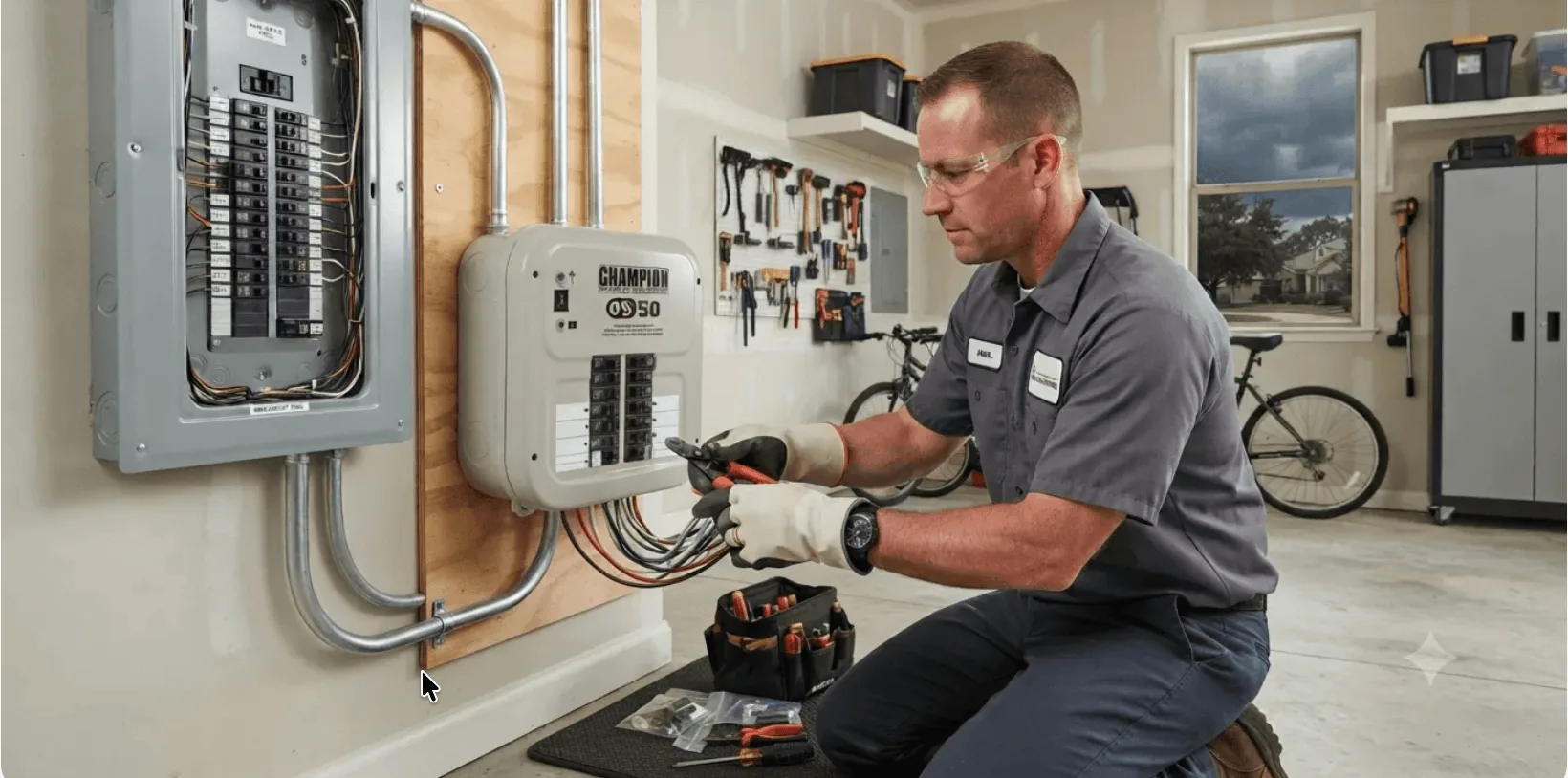
A generator transfer switch is a device installed next to your home's electrical panel that safely transfers power from the utility to a generator during an outage.
Instead of running extension cords throughout your house, a transfer switch allows you to power essential circuits such as:
- Refrigerator
- Freezer
- Internet equipment
- Medical devices
- Lights
- Ceiling fans
- Garage door opener
- Selected kitchen outlets
Once utility power returns, the switch safely returns your home to normal operation.
Why Is a Transfer Switch Important in Cypress?
Cypress homeowners know that severe thunderstorms, tropical storms, and hurricanes can leave neighborhoods without electricity for hours — or even days.
Having a portable generator is helpful, but without a transfer switch, powering your home safely becomes much more difficult.
A professionally installed transfer switch allows you to restore essential power quickly while reducing safety risks. For a broader storm-prep checklist, see our Cypress hurricane electrical safety checklist.
Can I Plug My Generator Into a Wall Outlet?
No. Sometimes called "backfeeding," plugging a generator directly into a home's electrical system through a dryer outlet or similar connection is extremely dangerous.
Backfeeding can:
- Energize utility power lines
- Endanger utility workers
- Damage your home's electrical system
- Damage your generator
- Create fire hazards
- Violate electrical codes
A properly installed transfer switch helps prevent this by isolating your home's electrical system from the utility before generator power is supplied.
Manual vs. Automatic Transfer Switches
Manual Transfer Switch
The homeowner manually switches from utility power to generator power after starting the generator. Benefits include:
- Lower installation cost
- Simple operation
- Ideal for portable generators
Automatic Transfer Switch
Automatic transfer switches are typically used with permanently installed standby generators. They can:
- Detect power outages automatically
- Start the generator
- Transfer power without homeowner intervention
- Switch back when utility power returns
These systems are often chosen by homeowners who want uninterrupted backup power.
What Can You Power?
The answer depends on your generator's capacity.
Many homeowners choose to power only essential circuits, including:
- Refrigerator
- Freezer
- Internet router
- Several lighting circuits
- Garage door opener
- Medical equipment
- A few kitchen outlets
An electrician can help determine which circuits are most important for your family's needs.
How Much Does Generator Transfer Switch Installation Cost in Cypress, TX?
The cost depends on the type of transfer switch, your electrical panel, and the complexity of the installation. Typical installed ranges are:
| Type | Typical Installed Cost |
|---|---|
| Manual transfer switch | $500–$1,200 |
| Generator interlock kit | $300–$800 (when compatible with the panel) |
| Automatic transfer switch (standby generator) | $800–$2,500+ (not including the standby generator) |
Additional costs may apply if:
- Your electrical panel requires upgrades.
- New circuits need to be added.
- Your generator requires additional wiring or equipment.
- Permit or inspection fees are required.
The best way to determine the right solution is to have a licensed electrician evaluate your home's electrical panel, generator, and backup power needs.
Is a Generator Transfer Switch Worth It?
For homeowners who expect to use a portable or standby generator during hurricanes or extended outages, many find a transfer switch to be a worthwhile investment because it can:
- Improve safety by preventing dangerous backfeeding.
- Make switching to generator power faster and easier.
- Power essential household circuits without running extension cords throughout the home.
- Support a code-compliant installation when connected to a home's electrical system.
Compared with the cost of damaged appliances, spoiled food, or the inconvenience of a prolonged outage, a transfer switch can provide valuable peace of mind during storm season.
Is a Transfer Switch Required?
If you're connecting a generator to your home's electrical system, a transfer switch or another approved transfer mechanism is generally required for safe operation.
A qualified electrician can ensure the installation complies with applicable electrical codes and manufacturer requirements.
Why Professional Installation Matters
Installing a transfer switch involves working inside your home's electrical panel.
Professional installation helps ensure:
- Proper circuit selection
- Safe wiring
- Code-compliant installation
- Proper grounding and bonding
- Reliable operation during an outage
It's also an opportunity to have your electrical panel inspected before hurricane season. If you also want surge protection at the panel, read our guide to whole-home surge protectors in Cypress.
Protect Your Houston Home Before the Next Hurricane
Prepare your home with expert guidance on generator safety, power outages, electrical hazards, and post-storm recovery.
Created specifically for Houston homeowners
Get practical hurricane preparedness tips designed specifically for Houston homeowners.
Free download | No spam | Unsubscribe anytime
Frequently Asked Questions
Can I install a transfer switch myself?
Because the installation involves your home's electrical panel, most homeowners should have it installed by a licensed electrician.
Will a transfer switch power my entire home?
Not necessarily. Portable generators usually power selected circuits, while larger standby generators may be able to power much more of the home, depending on their capacity.
What's the difference between an interlock kit and a transfer switch?
Both can help safely connect a generator when properly installed and used. The best option depends on your electrical panel, generator, and household needs. A licensed electrician can explain which solution is appropriate for your home.
Can I add a transfer switch later?
Yes. Many homeowners purchase a portable generator first and add a transfer switch later to improve safety and convenience.
Is a transfer switch worth it?
For homeowners who expect to use a generator during storms or extended outages, many find the added safety, convenience, and code-compliant operation well worth the investment.
Sources
- Federal Emergency Management Agency (FEMA) — Power Outages. https://www.ready.gov/power-outages
- Electrical Safety Foundation International (ESFI) — Portable Generator Safety. https://www.esfi.org/