
TL;DR
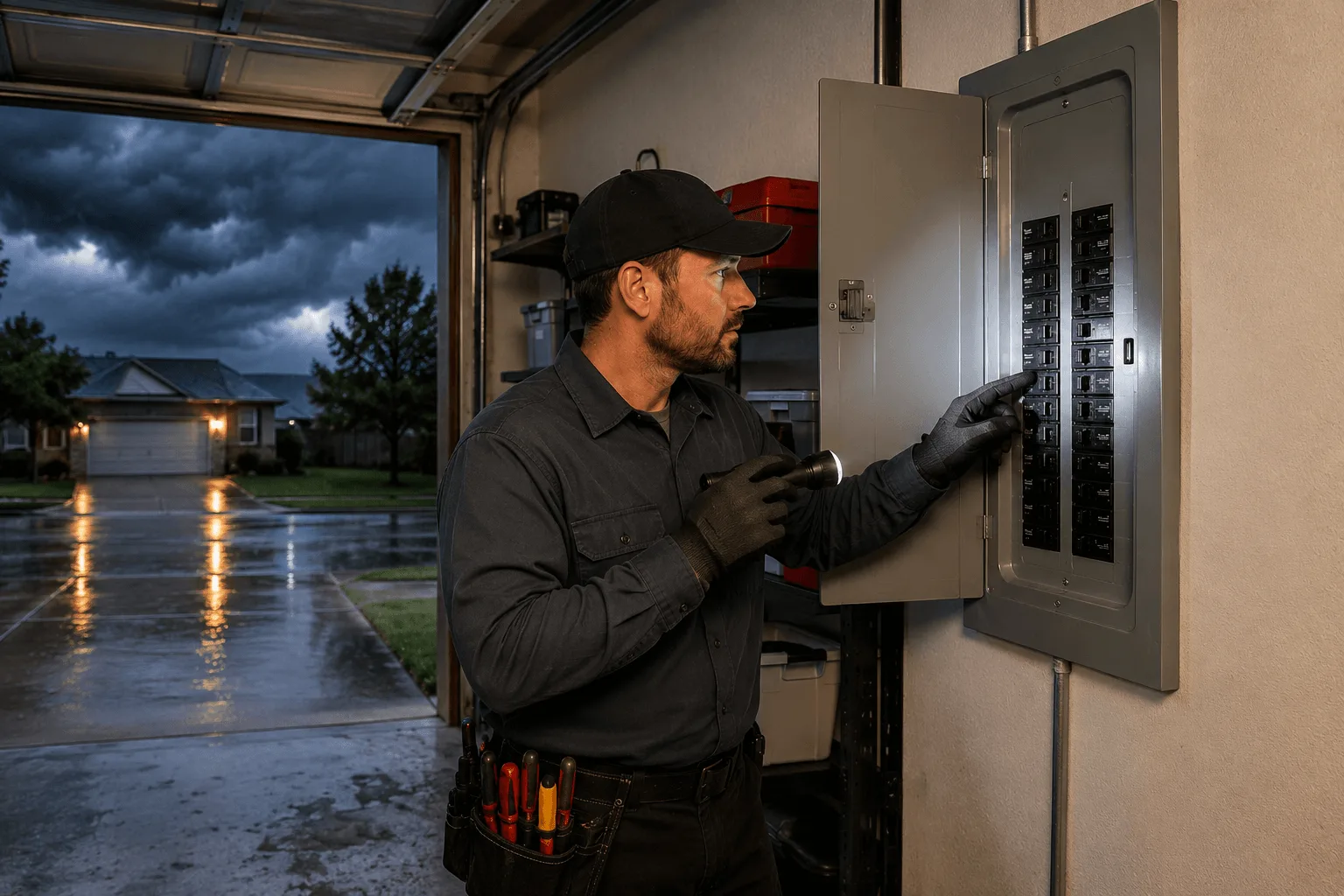
If your breakers trip after a storm, first unplug sensitive electronics and look for signs of water damage or flooding around your electrical panel. You can try resetting a breaker once if conditions are dry, but if it immediately trips again or you notice burning smells, buzzing, or water intrusion, stop using that circuit and contact a licensed electrician.
Why trust Houston Local Advantage?
We research local home service providers and publish homeowner guides using information from trusted organizations. Our goal is to help Houston-area homeowners make informed decisions before hiring a contractor or preparing for severe weather.
Storms can leave behind more than fallen branches and flooded streets. Power surges, lightning strikes, heavy rain, and utility interruptions can all affect your home's electrical system. If one or more breakers trip after a storm, it is important to determine whether the problem is temporary or a sign of a more serious electrical issue.
In many cases, a breaker trips because it is doing exactly what it was designed to do: protecting your home from dangerous electrical conditions. Understanding why it happened and knowing when it is safe to reset the breaker can help keep your family and home safe.
Why Do Breakers Trip After a Storm?
Breakers trip after storms because they detect unsafe electrical conditions such as power surges, moisture, short circuits, or overloaded circuits when utility power is restored. Sometimes the issue is temporary, but repeated tripping can signal damage that needs a licensed electrician's inspection.
Common causes include:
- Lightning-related power surges
- Utility power fluctuations as electricity is restored
- Water entering outdoor electrical equipment
- Moisture inside electrical panels
- Damaged appliances creating a short circuit
- Overloaded circuits when power returns
Sometimes the issue is temporary. Other times, it may indicate damage that should be inspected by a licensed Cypress electrician.
Step 1: Check for Water Damage Before Touching Your Panel
Before resetting any breaker, look for water around the electrical panel, wet walls, dripping, or signs of flooding. Never touch the panel if water may have entered the equipment. Water and electricity can create electrocution and fire hazards that require professional help.
Look for:
- Standing water
- Signs of flooding
- Water dripping from the panel
- Wet walls around electrical equipment
Never touch an electrical panel if there is standing water or you suspect water has entered the equipment.
Water and electricity create a dangerous combination that can result in electrocution or fire.
Step 2: Unplug Sensitive Electronics
If power has just returned, unplug sensitive electronics before resetting breakers when practical. Utility power can fluctuate several times during restoration, and those changes may damage televisions, computers, network equipment, gaming systems, and other electronics connected to affected circuits.
Items worth protecting include:
- Televisions
- Desktop computers
- Gaming consoles
- Home office equipment
- Network equipment
If storm-related surges are a concern, read our guide to whole-home surge protectors in Cypress, TX.
Step 3: Reset the Breaker Once
If the panel is completely dry and there are no signs of damage, reset the breaker one time only. Move it fully to OFF, wait a few seconds, then switch it firmly back to ON. If it trips again, stop resetting it.
To properly reset a breaker:
- Move the breaker completely to the OFF position.
- Wait a few seconds.
- Firmly switch it back to the ON position.
If the breaker stays on, the problem may have been temporary.
If it immediately trips again, stop resetting it.
Repeatedly forcing a breaker back on can create additional hazards and may indicate a short circuit or damaged wiring.
When You Should Not Reset a Breaker
Do not reset a breaker if you notice burning odors, buzzing, crackling, sparks, smoke, water inside the panel, visible damage, or a breaker that feels unusually hot. These symptoms can point to a dangerous electrical fault that needs professional inspection.
Do not continue resetting breakers if you notice any of the following:
- Burning odors
- Buzzing or crackling sounds
- Smoke
- Sparks
- Water inside the electrical panel
- A breaker that feels unusually hot
- Visible damage to outlets or switches
These symptoms may indicate a dangerous electrical fault that requires professional inspection.
Common Reasons Breakers Trip After Severe Weather
A tripped breaker can come from a temporary overload, but storm-related causes are not all equal. Water intrusion, short circuits, lightning damage, and damaged appliances deserve more caution than a one-time overload after power restoration.
| Cause | Safe to Reset? | Call an Electrician? |
|---|---|---|
| Temporary overload | Usually | Not always |
| Utility power surge | Sometimes | Sometimes |
| Lightning damage | Maybe | Yes |
| Water intrusion | No | Yes |
| Short circuit | No | Yes |
| Damaged appliance | Maybe | Often |
Can Lightning Damage a Breaker?
Yes. A nearby lightning strike can create powerful electrical surges that damage breakers, panels, appliances, HVAC equipment, and smart home devices. A whole-home surge protector can help reduce risk from many storm-related surges, though no device can guarantee protection from every lightning event.
Although breakers are designed to protect your electrical system, a nearby lightning strike can damage:
- Circuit breakers
- Electrical panels
- Appliances
- HVAC equipment
- Smart home devices
Installing a whole-home surge protector can help reduce the risk of damage from utility surges associated with severe weather.
Why Your Breaker Keeps Tripping
If a breaker trips every time you reset it, the breaker is usually responding to an underlying problem rather than simply malfunctioning. Possible causes include damaged wiring, a failed appliance, water inside an outlet, a short circuit, or a ground fault.
Possible causes include:
- Damaged wiring
- A failed appliance
- Water inside an outlet
- A short circuit
- Ground faults
The breaker is doing its job by preventing overheating that could lead to an electrical fire.
If the problem involves a protected outlet that will not stay reset, see what can cause a GFCI outlet to keep tripping.
Storm Recovery Tips for Cypress Homeowners
Cypress homeowners are no strangers to severe thunderstorms, heavy rainfall, and hurricane-related outages. Preparing your electrical system before storm season and knowing what to do afterward can reduce the risk of injury and expensive repairs.
If you have not already, consider reviewing your home's electrical preparedness before the next major storm. Start with our Hurricane Electrical Safety Checklist and our guide to Generator Transfer Switch Installation.
If your breakers are not tripping but your lights are repeatedly dimming or flickering, see our guide to why lights flicker in Cypress homes.
Final Thoughts
A tripped breaker after a storm is not always a reason to panic, but it should never be ignored. Circuit breakers are designed to protect your home from unsafe electrical conditions, and repeated tripping often signals that something needs attention.
If your breaker will not reset, your electrical panel shows signs of water damage, or you are unsure whether your home's electrical system is safe after a storm, it is best to have the system inspected by a licensed electrician before restoring power to the affected circuits.
Protect Your Houston Home Before the Next Hurricane
Prepare your home with expert guidance on generator safety, power outages, electrical hazards, and post-storm recovery.
Created specifically for Houston homeowners
Get practical hurricane preparedness tips designed specifically for Houston homeowners.
Free download | No spam | Unsubscribe anytime
Frequently Asked Questions
Why does my breaker keep tripping after a storm?
Storms can cause power surges, lightning damage, moisture intrusion, or damaged appliances that create electrical faults. If the breaker continues tripping after one reset, the circuit should be inspected.
Can I keep resetting a breaker until it stays on?
No. If a breaker immediately trips after being reset, repeatedly forcing it back on can increase the risk of electrical damage or fire.
Can rain cause a breaker to trip?
Yes. Water entering outdoor outlets, exterior wiring, or electrical equipment can create ground faults that cause breakers to trip.
Should I replace a breaker that trips after every storm?
Not necessarily. A frequently tripping breaker may indicate another electrical issue rather than a defective breaker. An electrician can determine the actual cause.
When should I call an electrician?
You should contact a licensed electrician if the breaker will not stay on, you smell burning, water entered your electrical equipment, multiple breakers trip repeatedly, or you notice sparks or buzzing sounds.
Sources
- U.S. Consumer Product Safety Commission. Storm Safety Guide. https://www.cpsc.gov/Safety-Education/Safety-Education-Centers/Storm-Safety-Guide
- Federal Emergency Management Agency (FEMA). Power Outages. https://www.ready.gov/power-outages