
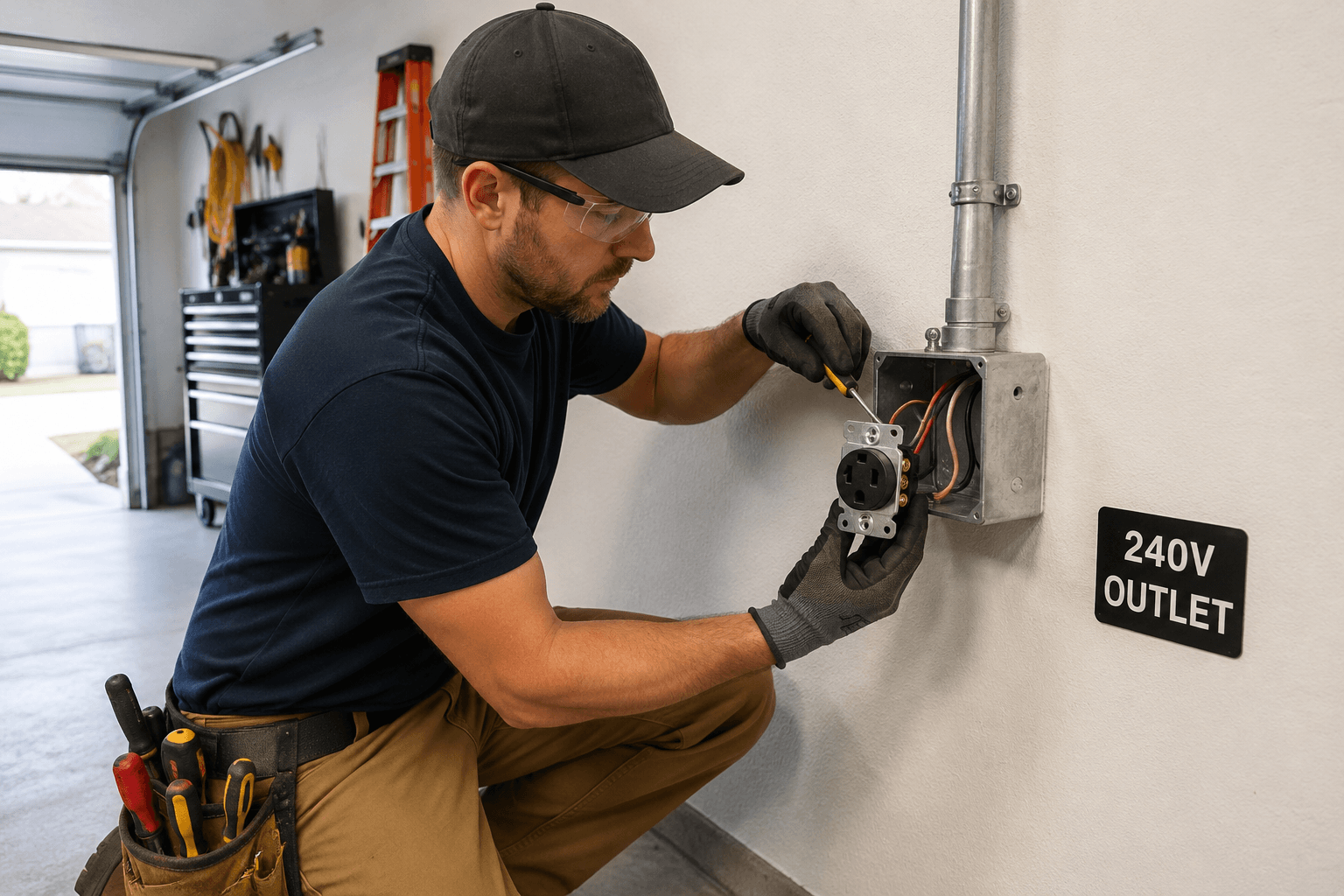
In Katy, a basic outlet installation usually costs about $100 to $250 total, with many homeowners landing somewhere in the middle of that range for a straightforward job. If the electrician is just replacing an existing outlet with a standard new one, the price can be lower than a fresh install. If the work involves running new wire, cutting into drywall, adding a GFCI outlet, or dealing with a home that needs extra troubleshooting, the total can climb quickly. A lot of the price is not the outlet itself, because the part is usually cheap. What you are really paying for is the electrician's time and service call, the skill to do the wiring safely, and the ability to make sure the circuit is code compliant and works the way it should.
Why Katy Home Characteristics Affect the Price
The cost makes more sense once you think about how Katy homes are built. Most subdivisions here were developed between the late 1970s and the early 2000s, which means the housing stock is more consistent than older Houston neighborhoods but still comes with its own complications. A home in Cinco Ranch or Grand Lakes built in the 1990s may have cleaner access than a home in Kelliwood or Nottingham Country that has had additions, garage conversions, or kitchen remodels over the years. If the electrician can tie into a nearby circuit without much fishing, the job is faster and cheaper. If they have to run wire through an attic, a crowded wall, or a tight space behind cabinets, the labor goes up.
Katy homes from the 1980s sometimes have aluminum branch wiring, which requires special handling and compatible connectors when adding or replacing outlets. According to the U.S. Consumer Product Safety Commission (CPSC), homes with aluminum wiring are 55 times more likely to have connections reach fire hazard conditions compared to homes with copper wiring — which is why an electrician who finds aluminum wiring during an outlet install will take more care with the connections, and that additional time affects the final cost. Homes in areas that flooded during Hurricane Harvey near the Addicks and Barker reservoirs may also have outlets that look functional but have hidden corrosion or damaged insulation behind the wall. An electrician working in those areas may spend extra time verifying the circuit is safe before completing the install.
Location in the Home Changes the Price Significantly
The same outlet in different locations can cost very different amounts. A standard outlet in a dry interior wall is the simplest and cheapest scenario. An outlet in a garage, bathroom, kitchen, patio, or outdoor wall requires special protection and often a different type of circuit entirely. GFCI outlets are required by code in any area where water is a concern, and weatherproof covers are required for exterior locations. The Houston Permitting Center confirmed that all permit applications in the Houston area are now reviewed under the 2023 National Electrical Code, which expanded GFCI requirements to cover all kitchen receptacles, garages, bathrooms, and outdoor locations — making code compliance a bigger factor in outlet installation costs than it was even a few years ago. Those parts cost more and the installation takes longer because the electrician has to confirm code compliance before finishing the job.
Katy's climate adds a layer to exterior outlet work specifically. Outdoor outlets in Katy are exposed to high humidity, summer heat, and seasonal flooding in some neighborhoods. A weatherproof cover is not just a code requirement here, it is a practical necessity. An electrician who does the job correctly will make sure the exterior installation is rated for the conditions rather than just meeting the minimum standard.
When a Simple Outlet Job Becomes a Bigger Project
If the outlet needs a new circuit instead of tapping into an existing one, the cost can jump significantly because the electrician may need to run wire from the panel, open walls, and possibly make panel adjustments. In Katy, where many homes were built with panels sized for the electrical loads of the 1980s and 1990s, adding circuits to accommodate modern appliances, EV chargers, home offices, or outdoor kitchens sometimes reveals that the panel is already near capacity. What started as an outlet installation becomes a panel conversation, and that changes the scope and the price, which is one reason electrical work can cost more than expected.
Katy straddles Harris and Fort Bend County, and permit requirements for new circuits vary depending on your exact address. An electrician who knows the local jurisdiction will pull the correct permit and schedule the required inspection. One who does not may skip the permit entirely, which saves money upfront but creates problems when you sell the home or file an insurance claim.
Service Minimums and Travel Affect the Total
Electricians do not charge only for the minutes spent wiring the outlet. They charge for the visit itself. That means a small job often includes a truck roll, diagnosis, material, labor, and testing. Even if the install is quick, the electrician still has to get to your home, confirm the circuit is safe, shut off power, make the connections, secure the box, and test everything before leaving.
Katy's location at the western edge of the Houston metro means travel time is a real factor. A company driving out from a shop near the Beltway or from central Houston is covering significant ground before arriving at your door, and that cost is built into the service minimum whether it shows up as a line item or not. Companies that regularly work Katy neighborhoods like Firethorne, Seven Meadows, and Cinco Ranch tend to have more predictable pricing for local jobs because they are already in the area rather than driving across the metro.
How Summer and Storm Season Affect Outlet Installation Costs
During summer, electricians in Katy are busy, attics are brutally hot, and electrical systems are under heavier load from AC use across thousands of homes simultaneously. After storms, power surges, or lightning strikes, demand goes up fast. If your outlet installation is tied to surge damage or a post-storm repair, the electrician may spend extra time checking the rest of the circuit before installing anything new. That is not padding the bill. It is the difference between a quick install and a proper repair that does not create a new problem later.
Katy's history with major weather events means post-storm outlet calls are genuinely common here. Surge damage from lightning strikes can affect multiple outlets on the same circuit without being immediately obvious, and a thorough electrician will check the whole circuit rather than just replacing the one outlet that stopped working.
What Katy Homeowners Should Expect
A single standard outlet is usually a modest electrical job but not a dirt cheap one. The final number depends on whether the outlet is a replacement or a new addition, how easy the location is to reach, whether the circuit already exists, and whether the part needs special protection or upgraded wiring. If the home has aluminum wiring, the circuit is crowded, or the outlet is in a difficult location, the bill can move higher than expected.
A good Katy electrician will explain those variables upfront so you know why the number is what it is and what is included in the install. If the quote seems unclear or does not address permit requirements, ask directly before anyone starts work. If you are comparing quotes, check whether the estimate is free.