
TL;DR
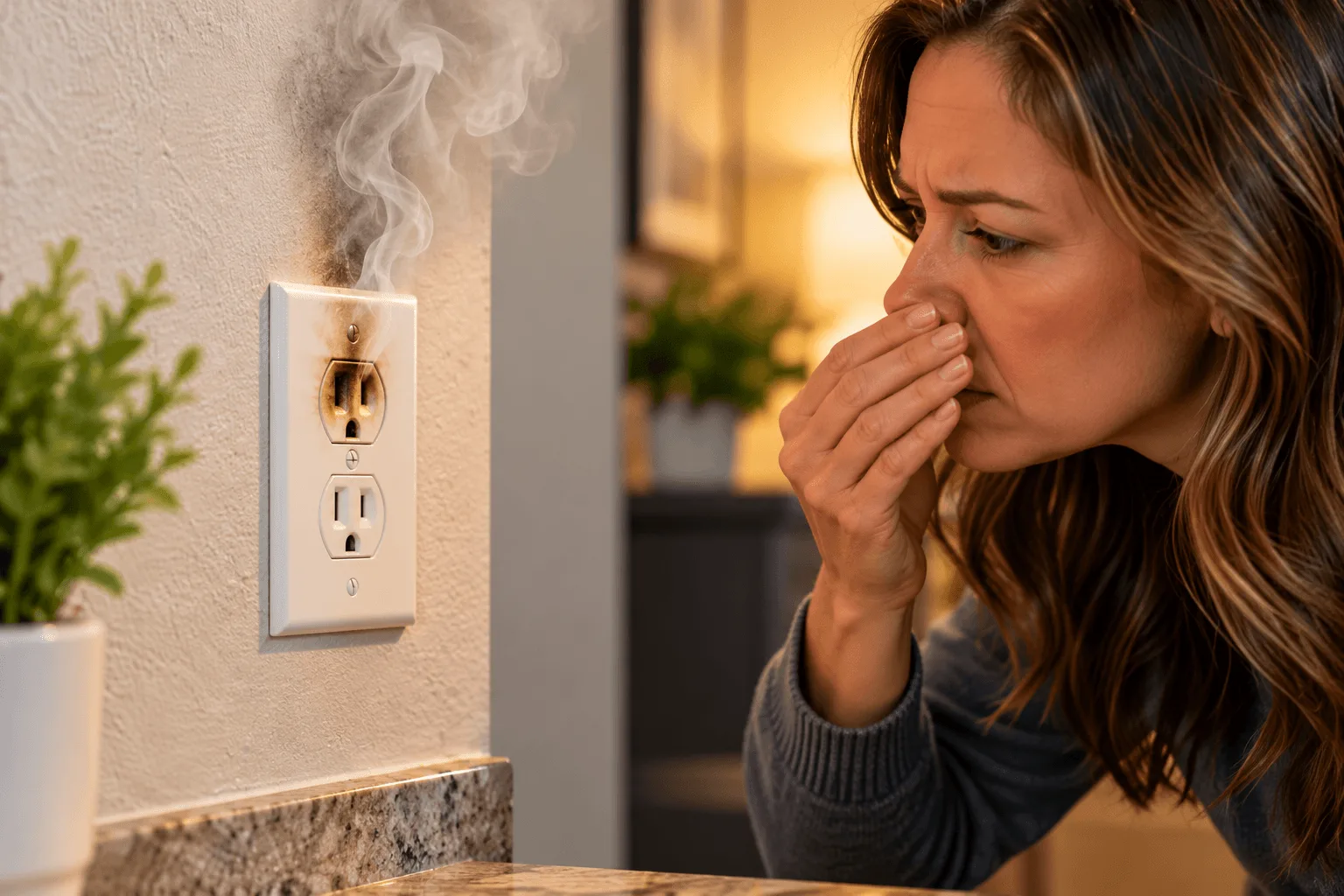
If an electrical outlet smells like it is burning, stop using it. Unplug connected devices if you can do so safely, and do not keep resetting a breaker or testing the outlet to see whether the smell returns. A burning odor can be associated with overheating, an overloaded circuit, a damaged receptacle, or a wiring problem. ESFI lists a burning odor from receptacles or wall switches as a warning sign of an overloaded circuit, while the U.S. Consumer Product Safety Commission says burned or overheated wires can give off the odor of hot insulation.
Why trust Houston Local Advantage?
We research local home service providers and publish homeowner guides using information from trusted organizations. Our goal is to help Houston-area homeowners make informed decisions before hiring a contractor or preparing for severe weather.
A burning smell near an electrical outlet is not something to ignore. Even if you do not see smoke or sparks, the odor can be a warning that a receptacle, plug, connection, or wiring behind the outlet is overheating.
For Cypress homeowners, the safest response is to stop using the affected outlet and have the problem evaluated if the smell appears to be coming from the electrical system.
Why Would an Electrical Outlet Smell Like It’s Burning?
The smell may seem like it is coming from the plastic faceplate, but the source can be the outlet itself, a plug, an appliance, or wiring and connections inside the electrical box.
Here are several possibilities a qualified electrician may investigate.
1. The Outlet or Circuit Is Overloaded
An outlet does not provide unlimited power. Plugging in equipment that places too much demand on a circuit can contribute to overheating.
Electrical Safety Foundation International identifies several warning signs of an overloaded circuit, including warm or discolored wall plates, buzzing or sizzling receptacles, frequently tripped breakers, flickering lights, and a burning odor from receptacles or wall switches.
Power strips also do not increase the amount of power available from the circuit. If a homeowner regularly needs extension cords, multi-outlet adapters, or several high-demand devices in one area, the electrical system may need to be evaluated rather than simply adding more places to plug things in.
2. A Connection May Be Loose or Deteriorating
Electrical connections can loosen or deteriorate over time. A poor connection can create excessive heat at the receptacle or in the wiring behind it.
This is one reason a burning smell deserves attention even when the outlet still appears to work normally. The visible receptacle is only one part of the electrical connection.
If you notice the smell together with a hot outlet, discoloration, crackling, buzzing, or intermittent power, stop using the outlet and have it inspected.
3. The Receptacle May Be Worn or Damaged
Outlets wear with age and use. A plug that feels unusually loose or easily falls out can indicate that the receptacle no longer grips the plug properly.
The CPSC lists loose plugs, damaged insulation, overheating, buzzing, sparks, and odors from overheated wiring among warning signs homeowners should pay attention to.
A receptacle that looks cracked, scorched, melted, or discolored should not continue to be used.
4. The Plug, Cord, or Appliance May Be Overheating
Sometimes the outlet is not the only possible source.
If the burning smell begins when a particular appliance is plugged in or turned on, the plug, cord, or appliance may also need to be evaluated. Look from a safe distance for obvious cord damage, discoloration, melting, or unusual heat.
Do not keep moving a suspicious appliance from outlet to outlet to test whether the problem follows it.
5. Wiring Behind the Outlet May Be Overheating
A burning smell can occur without visible damage on the face of the outlet.
CPSC guidance notes that burned or overheated wires can produce an odor of hot insulation. That means a normal-looking wall plate does not necessarily rule out an electrical problem behind it.
If the odor persists after devices are unplugged, or seems strongest near the wall or receptacle, do not remove the outlet to investigate unless you are qualified to perform electrical work.
What If the Outlet Is Hot and Smells Like It’s Burning?
Heat and a burning odor together are stronger warning signs than either one alone.
CPSC guidance says receptacle outlet covers and other electrical components may sometimes feel warm, but they should not be hot, painful to touch, or discolored from heat.
If your outlet is hot as well as producing a burning smell, stop using it. Our guide on why an electrical outlet feels hot explains several reasons an outlet may overheat and when professional inspection is appropriate.
What If the Breaker Keeps Tripping Too?
A breaker is designed to interrupt the circuit when certain unsafe electrical conditions occur. A burning smell combined with repeated breaker trips should not be treated as a nuisance that can be solved by continually resetting the breaker.
If this is happening in your home, see our Cypress guide to circuit breakers that keep tripping for more information about common causes and when repeated trips warrant an electrician.
What If the Outlet Stops Working?
An outlet that stops working after smelling hot or burned should not simply be assumed to have failed harmlessly.
A tripped breaker or GFCI can interrupt power, but damage to the receptacle or wiring can also be involved. If the outlet has shown warning signs such as heat, discoloration, buzzing, sparks, or a burning smell, leave it unused until the cause is identified.
Our guide to an electrical outlet that is not working covers the safer checks homeowners can make before deciding what to do next.
Could a GFCI Outlet Smell Like It’s Burning?
A GFCI receptacle is designed to reduce the risk of electric shock from ground faults. It is not supposed to smell burned or become dangerously hot during normal operation.
If a GFCI outlet has a burning odor, visible discoloration, melting, buzzing, or unusual heat, stop using it rather than repeatedly pressing TEST or RESET.
If your main issue is a GFCI that repeatedly shuts off without these heat or burning signs, see our guide to why a GFCI outlet keeps tripping.
Can a Burning-Smelling Outlet Cause a Fire?
A burning odor can be a sign of an electrical condition capable of creating dangerous heat.
ESFI identifies burning smells, warm outlets, discoloration, buzzing, flickering lights, and frequent breaker trips as warning signs of overload or wiring problems and recommends having a qualified electrician inspect the system when these signs appear.
You do not need to see flames for an electrical problem to deserve attention.
What Should I Do If I Smell Burning Near an Outlet?
First, determine whether you can safely move away from the immediate hazard.
If there is active smoke, fire, sparking, or an immediate fire danger, leave the area and contact emergency services rather than attempting a repair.
If there is no active fire and it is safe to do so:
- Stop using the affected outlet.
- Unplug connected devices only if they can be removed safely and are not hot, melted, sparking, or otherwise dangerous to touch.
- Keep people from using the outlet.
- Do not cover the smell with air freshener or assume it is gone because the odor fades.
- Do not repeatedly reset a breaker if it trips again.
- Arrange for a qualified electrician to inspect the problem.
Do not remove the receptacle cover and begin tightening, testing, or replacing wiring unless you are qualified to perform electrical work.
Can I Keep Using the Outlet If the Smell Goes Away?
The odor disappearing does not establish that the underlying problem is gone.
Electrical heating may occur only when a particular device is running, when the circuit is under heavier load, or when a loose connection is carrying current. Once the load is removed, the component can cool and the smell may fade.
If you have identified a genuine electrical burning smell at an outlet, the safer choice is to leave that outlet unused until the cause has been evaluated.
Find an Electrician in Cypress
A burning electrical smell is a warning sign worth taking seriously. If you need professional help identifying the source, visit our Cypress Electricians guide to find local electricians serving Cypress homeowners.
Frequently Asked Questions
Why does my outlet smell like burning plastic?
A burning-plastic or hot-insulation smell near an outlet can be associated with overheating electrical components, damaged wiring, a deteriorating receptacle, or a problem with a connected plug or appliance. Stop using the outlet and have the source identified.
Why does my outlet smell burned but still work?
An outlet can still supply power even when a connection or component is overheating. Continued operation does not prove the receptacle is safe.
What if the outlet smells burned but is not hot?
Do not rely on the faceplate temperature alone. The source of the odor could be a plug, appliance, connection, or wiring behind the receptacle. If the odor appears electrical, stop using the outlet and have it evaluated.
Should I unplug everything from an outlet that smells like it’s burning?
If there is no active fire, sparking, melting, or other condition that makes approaching the outlet unsafe, disconnecting devices can remove the electrical load. Do not touch a plug or cord that is visibly damaged, melted, sparking, or dangerously hot.
Can an overloaded outlet smell like it’s burning?
Yes. ESFI lists a burning odor from receptacles or wall switches among the warning signs of an overloaded circuit.
Can a loose outlet cause a burning smell?
A worn or loose receptacle can be associated with poor electrical contact and overheating. CPSC materials identify loose plugs, overheating, odors, and other electrical abnormalities as warning signs that should not be ignored.
Can a burning smell come from inside the wall?
Yes. Electrical wiring and connections are located behind the visible receptacle, and CPSC guidance notes that overheated wiring can produce an odor of hot insulation. Do not open the electrical box yourself unless you are qualified to work on the system.
When should I call an electrician?
Call a qualified electrician when a burning odor appears to come from an outlet, switch, wiring, or another part of the home's electrical system—particularly if you also notice heat, discoloration, buzzing, crackling, sparks, flickering lights, or repeated breaker trips.
Sources
- Electrical Safety Foundation International (ESFI) — Don’t Overload Your Home. https://www.esfi.org/dont-overload-your-home
- U.S. Consumer Product Safety Commission (CPSC) — Guide to Home Wiring Hazards. https://www.cpsc.gov/s3fs-public/518.pdf